Gingerbread Girl Coquette Frame
A Designer’s First Glance: Sweet, Playful, and Purpose-Built
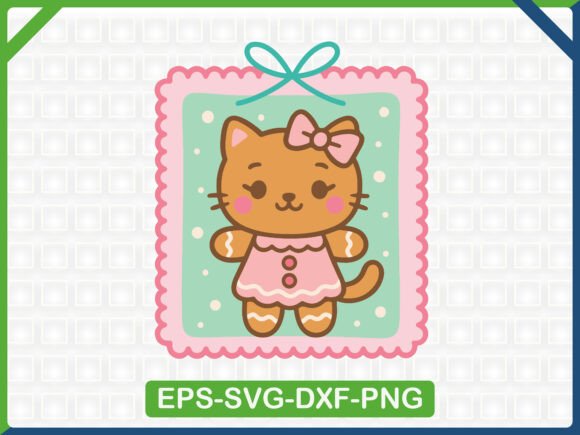
When Gingerbread Girl Coquette Frame landed in my inbox, I paused—not because it’s flashy, but because it’s disarmingly intentional. It doesn’t shout; it winks. The silhouette is a soft, rounded frame shaped like a gingerbread figure—curvy, rosy-cheeked, with delicate lace-like edges and a subtle coquette flair: a tilted bonnet, a dainty bow, and just enough whimsy to feel handmade without veering into clutter. As a machine embroidery design, its strength isn’t complexity—it’s cohesion. This isn’t a dense fill-stitch spectacle. It’s a balanced composition built for readability at 3–4 inches wide, with clear negative space, open curves, and intentional breathing room around key features. That tells me it was drafted with real fabric in mind—not just screen previews.
Where It Shines: Real Projects, Real Customers
Last week, I stitched Gingerbread Girl Coquette Frame onto a natural linen tea towel for a holiday pop-up booth. No frills—just medium-weight stabilizer, 40-weight cotton thread, and a standard 4” hoop. The result? Instant warmth. Customers picked it up, smiled, and said, “That feels like *my* kitchen.” That’s the magic: this design doesn’t just sit on fabric—it invites connection. It works beautifully as a sweatshirt embroidery centerpiece (center chest or lower back), a boutique tote bag design (left chest or front panel), or a baby onesie accent—especially when paired with soft pastel thread colors. As an embroidered patch, it holds shape without stiffness. On an apron pocket or pillow cover, the frame’s gentle outline creates focus without overwhelming the textile. For Etsy sellers and small shop owners, it’s a quiet brand builder: recognizable, seasonal but not locked to Christmas, and equally at home on nursery decor or wedding favors.
What You’ll Notice When Stitching
- Stitch density is moderate—no heavy satin-stitch congestion, so it lies flat on knits and won’t pucker thin cottons.
- The outer frame uses clean running stitch outlines, making it forgiving on stretchy fabric—if you stabilize properly.
- No tiny lettering or micro-details to vanish in fill stitch—so it reads clearly even at 2.5” on a child’s cap or baby bib.
- The coquette elements (bow, bonnet trim) are simplified just enough to avoid thread breaks or fuzzy edges on mid-tier machines.
Where to Pause—and Why
This isn’t a one-size-fits-all embroidery file. On dark fabric, test contrast first: light thread on charcoal can mute the delicacy of the lace effect. On textured fabrics like terry cloth or bouclé, the fine outer lines may soften—so consider using it on smoother surfaces like brushed cotton, poplin, or twill. Avoid cramming it into hoops smaller than 3.5”—the bonnet curve and bow lose definition below that. And while it’s lovely on curved surfaces like baseball caps, skip the crown curve; place it on the front panel instead. Also, if your finished product will face frequent washing (think kids’ towels or aprons), reinforce with tear-away + cut-away stabilizer combo—this design’s open areas need support to stay crisp over time.
Design Integrity Meets Commercial Reality
As a digital embroidery file marketed under T-Shirt Designs and Graphics, Gingerbread Girl Coquette Frame walks a smart line: it’s versatile enough for prints and mugs, yet detailed enough to earn its place in a handmade product. That duality matters. When customers see it on a custom apparel listing, they don’t just register “gingerbread”—they sense care, intention, and a cohesive aesthetic. That builds trust. For craft business owners, that translates to higher perceived value and stronger repeat engagement. It also scales well visually: use it alone as a minimalist statement, or layer it thoughtfully with a simple monogram or date—never overcrowd. Its charm is in restraint.
Practical Designer Notes Before You Stitch
- Always run a test on scrap fabric matching your final project’s weight and stretch.
- Check thread color contrast in both daylight and indoor lighting—especially for gift items.
- Review stitch order: does the frame lay down before interior details? A logical sequence prevents shifting.
- Confirm hoop size compatibility—don’t assume it fits your smallest hoop without measuring.
- Inspect corners and curves in your embroidery software: are stitch angles smooth, or do they stutter?
- Test a black-and-white mockup—this design relies on shape and rhythm more than color, so grayscale clarity is essential.
- Compare how it reads on light vs. dark backgrounds using printable mockups—your Etsy thumbnails depend on this.
- Use appropriate stabilizer: cut-away for knits, tear-away for stable wovens, and lightweight fusible for delicate baby items.
- Verify licensing terms before selling finished embroidered goods or reselling the digital embroidery file—commercial use isn’t automatic.
Final Thought: Not Just a Design—A Conversation Starter
Gingerbread Girl Coquette Frame doesn’t try to be everything. It’s not a maximalist holiday motif or a technical showcase. It’s a quiet, confident choice—for the designer who knows that sometimes the most memorable embroidered patch, tote bag design, or personalized gift is the one that feels like it was made *for* someone, not just *on* something. It suits craft fairs where shoppers linger over texture and story. It fits Etsy listings where buyers scroll past noise and pause at warmth. And for anyone stitching holiday embroidery, baby embroidery, or small shop merchandise—it delivers professionalism without pretense. Just make sure you test, stabilize, and trust the simplicity. Because in embroidery, the sweetest frames are the ones that hold space—not fill it.