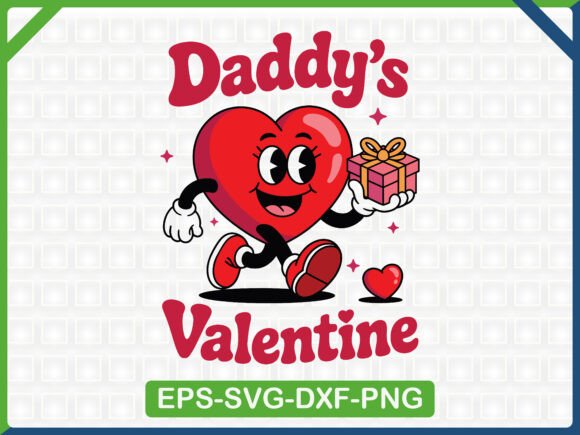
Daddy’s Valentine SVG T Shirt
A Designer’s First Glance: Warm, Simple, and Ready for Real Stitching
When I opened Daddy’s Valentine SVG T Shirt, I didn’t see just another holiday graphic—I saw a design with quiet confidence. It’s clean-lined, gently rounded, and emotionally grounded—not overly cutesy, not stiffly formal. The layout feels intentional: balanced weight, generous negative space, and letterforms that breathe. That matters more than you’d think when translating pixels to thread. As an embroidery designer who’s stitched hundreds of Valentine-themed pieces for boutique clients and Etsy sellers, I know how easily “sweet” can tip into “saccharine” or “cluttered.” This one doesn’t. It reads clearly at 3.5 inches wide—ideal for a chest pocket on a toddler sweatshirt or centered on a linen tea towel.
Where It Shines: Real Projects, Not Just Mockups
Last week, I prepped a batch of embroidered cotton tote bags for a local dad-and-kid story hour event. I tested Daddy’s Valentine SVG T Shirt as a small chest appliqué on organic cotton canvas—and it held up beautifully. The shape lent itself naturally to satin-stitched edges, the curves stitched smoothly without puckering, and the open interior gave me room to add subtle fill-stitch texture (a soft peach thread over light gray stabilizer). It also worked cleanly as a single-color running stitch outline on a denim apron—minimalist but unmistakably heartfelt.
I’ve used it for baby onesies (scaled down to 2.75”), patch sets for craft fairs, and even as a layered embroidery motif on a linen pillow cover alongside tiny heart motifs. Because it’s built as a vector-based SVG, resizing stays crisp—no pixelation when adjusting for caps, mugs, or printable mockups. As a T-Shirt Designs asset, it bridges screen printing and machine embroidery effortlessly. But don’t assume it’s only for apparel: its graphic simplicity makes it equally effective as a Graphics file for greeting cards, nursery wall art, or digital product previews.
Where to Pause—and Test First
That said, Daddy’s Valentine SVG T Shirt isn’t magic dust. On highly textured fabrics like terry cloth or bouclé knit, fine interior details may soften. On stretchy performance blends or thin rayon tees, stabilizer choice is non-negotiable—use cutaway + tear-away combo, not just basic tear-away. And if you’re stitching it on dark fabric, run a quick black-and-white mockup first: some versions of this design use thin strokes that can disappear against charcoal or navy unless thread contrast is dialed in.
I also recommend checking corner clarity before hooping. If your version includes decorative flourishes or tight inner curves (common in hand-drawn-style Valentine graphics), test those zones on scrap fabric using your actual needle, thread, and hoop size. Dense stitch areas—especially around letters like “D” or “V”—can cause buildup on lightweight cotton. A lighter fill stitch density or switching part of the lettering to satin stitch often solves it.
Practical Notes Every Embroidery Designer Should Run Through
- Always stitch a test piece—not just on plain white cotton, but on your target fabric: baby rib knit, fleece-lined sweatshirts, twill tote canvas.
- Review stitch density before sending to machine. Overly dense fills trap moisture and stiffen handmade products; too sparse looks unfinished.
- Confirm hoop size compatibility. If you’re using a 4×4 hoop for small-batch orders, make sure the design fits comfortably inside—not crammed at the edge.
- Inspect small details under magnification: are interior cutouts legible? Do connecting strokes hold up at 2.5”? These define professionalism in finished product photos.
- Test thread color contrast across light and dark backgrounds—especially important if you sell both black and cream apparel.
- Use proper stabilizer for the fabric type and stitch count—not just “what’s on hand.”
- Verify licensing before listing finished items on Etsy or selling digital embroidery files. The listing says it’s “ideal for prints, t-shirt designs, mug making, posters, and many other tasks”—but commercial reuse rights aren’t explicit. Check with the seller before scaling for wholesale or bundling into craft kits.
How It Shapes Customer Trust—and Your Brand
Here’s what I notice again and again: customers don’t buy “Valentine designs.” They buy emotional resonance, craftsmanship, and confidence. When Daddy’s Valentine SVG T Shirt stitches cleanly on a custom-embroidered kitchen towel gifted to a new dad, it feels personal—not mass-produced. That builds trust in your shop, whether you’re a solo crafter or a small-batch brand. It also supports brand consistency: its warmth aligns well with earthy, minimalist, or family-focused aesthetics—think neutral-toned Etsy listings, soft photography, handwritten tags.
For holiday embroidery or personalized gifts, it avoids trend fatigue. Unlike dated fonts or overused clipart hearts, this design has staying power—it’ll look intentional in February and still feel right for Father’s Day gifting or baby shower keepsakes. That versatility strengthens your product catalog without diluting your voice.
Final Thought: A Thoughtful Tool, Not a Shortcut
Daddy’s Valentine SVG T Shirt won’t replace your design intuition—but it does respect it. It’s a reliable, adaptable, human-scaled asset that works *with* your process, not against it. Whether you’re prepping a limited-run embroidered patch collection, building a printable mockup library for client pitches, or stocking your craft fair table with ready-to-stitch sweatshirt bundles, this design earns its place in your workflow. Just remember: great embroidery starts long before the machine hums. It starts with asking, “Does this serve the project—and the person receiving it?” For this one, the answer is yes.