Born to Ride Dragons Forced to Take Airp
First Impressions: Whimsy with Wearable Weight
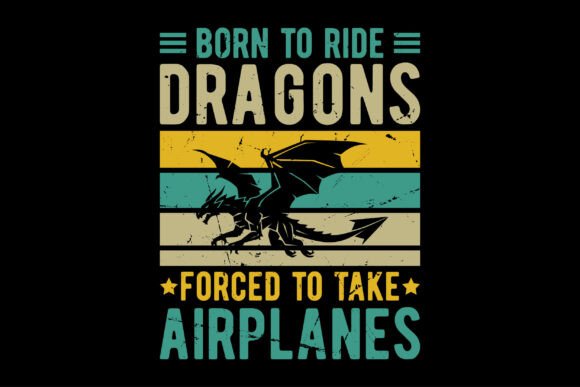
When I opened Born to Ride Dragons Forced to Take Airp, I didn’t just see a graphic—I felt its personality. It’s clever, slightly wistful, and unapologetically playful. The dragon motif isn’t aggressive or fantasy-epic; it’s stylized, friendly, and scaled for charm over intimidation. The airplane detail is subtle but unmistakable—no tiny wings or cockpit clutter, just clean suggestion. As an embroidery designer, I immediately asked: *Will this translate into stitch without losing its spark?*
A Real Project in Mind: Embroidering a Linen Tote for a Bookstore Pop-Up
Last week, I prepped a batch of heavyweight linen tote bags for a local indie bookstore’s “Myth & Modern Life” event. Their ask was simple: something literary, lighthearted, and instantly recognizable at 6 feet. Born to Ride Dragons Forced to Take Airp landed perfectly in that sweet spot. I sized it to 4.2" wide across the front panel—large enough to read, small enough to leave room for their logo on the strap. No overcrowding. No visual fatigue.
Where It Shines in Embroidery
- Custom apparel: Works beautifully on crewneck sweatshirts—especially midweight cotton blends where the design’s balance of line and shape reads clearly even at arm’s length.
- Tote bag design: Linen, canvas, and duck cloth hold the stitch definition well. The dragon’s curved tail and airplane silhouette don’t blur or puddle, thanks to intentional negative space.
- Embroidered patch: Clean outlines and moderate detail make it ideal for iron-on or sew-on patches—no micro-stitching traps or thread-nest zones.
- Holiday embroidery: Paired with navy or charcoal holiday sweaters, it reads as both nostalgic and fresh—great for gift markets where shoppers want personality, not cliché.
- Etsy seller appeal: It’s niche but broadly relatable—dragon lovers, travelers, teachers, librarians, and parents of imaginative kids all pause and smile. That pause turns into a cart click.
Where to Pause Before Stitching
This isn’t a “drop-and-stitch” file for every surface. Here’s where I’d slow down:
- Small hoop sizes (under 4"): The airplane wingtip and dragon’s eye are delicate—but not fragile. Still, under 3.5", some character softens. Test first on scrap fabric at your target size.
- Textured fabrics like terry cloth or bouclé: The design relies on crisp edge definition. On highly napped surfaces, consider light topping stabilizer—or shift to a simplified version if you’re offering custom options.
- Thin or stretchy fabric (e.g., baby onesies or lightweight tees): Use cutaway + tear-away combo stabilizer. The lettering (“Born to Ride…”) has consistent stroke weight—no ultra-thin serifs—so it holds up, but tension matters more here.
- Dark fabric backgrounds: It reads cleanly in light thread (ecru, pale gold, silver), but avoid white on black unless your machine handles dense satin stitch reliably. Check fill stitch density before finalizing.
- Curved surfaces like caps: The horizontal layout means it’ll wrap cleanly across a front panel—but avoid placing it too high on the crown. Stick to the standard cap front zone for best drape and readability.
What It Adds to Your Finished Product
Born to Ride Dragons Forced to Take Airp doesn’t just decorate—it invites conversation. Customers notice it, then *lean in*. That’s rare for a single-line graphic. In handmade product terms, it elevates perceived value: it feels intentional, not generic. For boutique branding, it adds wit without irony. For personalized gifts—say, a birthday tote for a kid who dreams of dragons *and* collects airplane tickets—it lands with emotional precision.
It also supports brand consistency. Whether you’re listing on Etsy, selling at craft fairs, or building a small shop product line, this design carries tone without needing explanation. No forced slogans. No overdesigned clutter. Just quiet confidence in its theme.
Practical Designer Notes Before You Stitch
- Always test Born to Ride Dragons Forced to Take Airp on scrap fabric matching your final project’s weight and weave.
- Check thread color contrast—not just on white, but on your actual base fabric. A warm cream thread sings on oat linen; cool gray pops on navy denim.
- Review stitch density in the dragon’s body fill. If it feels heavy for your fabric, reduce density by 5–10% in your software—don’t sacrifice clarity for density.
- Confirm hoop size compatibility early. This design scales well, but avoid stretching it beyond 120% of its native size without re-digitizing guidance.
- Inspect small details in black-and-white mockups. Does the airplane still read? Does the dragon’s grin hold up? Simplicity wins—but only if it’s intentional.
- Use proper stabilizer for your fabric type. Lightweight cutaway works for most cottons; mesh cutaway helps with knits.
- Verify licensing before selling finished items or digital embroidery files. Since this is listed as a T-Shirt Design and Graphics asset from a Professional T-Shirt Design Store, confirm commercial use rights directly with the source—especially if you plan to resell embroidered goods or offer the file as part of a craft bundle.
Final Thought: Not Just a Graphic—A Conversation Starter
As someone who’s stitched hundreds of designs for real clients, small shops, and holiday markets, I can say this: Born to Ride Dragons Forced to Take Airp earns its place in active rotation. It’s not flashy. It doesn’t shout. But it connects—and that’s what makes it valuable for embroidery designers, Etsy sellers, and creative entrepreneurs who build products people want to wear, carry, and gift. It’s proof that thoughtful simplicity, paired with genuine voice, still cuts through the noise. Just remember: respect the fabric, honor the stitch, and let the dragon—and the airplane—do the rest.